Silent Agreements: How Pre-Contract Deals Signed in Autumn Are Quietly Hollowing Out the January Transfer Window

For decades, the January transfer window carried a particular electricity. The frenzy of deadline day, the scramble for last-minute reinforcements, the sense that a single signing could alter the entire trajectory of a season. But in 2026, something has shifted. The window is still open, the rumours still circulate — yet an increasing number of the most significant player movements of the winter period are already done, sealed in boardrooms during October and November without a single pound changing hands.
Pre-contract agreements — legally binding commitments signed between a player and a new club when fewer than six months remain on their existing deal — are nothing new. The Bosman ruling of 1995 enshrined the right of players to negotiate and agree such arrangements freely. What is new is the scale, the sophistication, and the strategic intent with which clubs are now deploying them. What was once a last resort for selling clubs who had failed to negotiate a renewal has become a primary recruitment instrument for buying clubs operating in an era of inflated transfer fees.
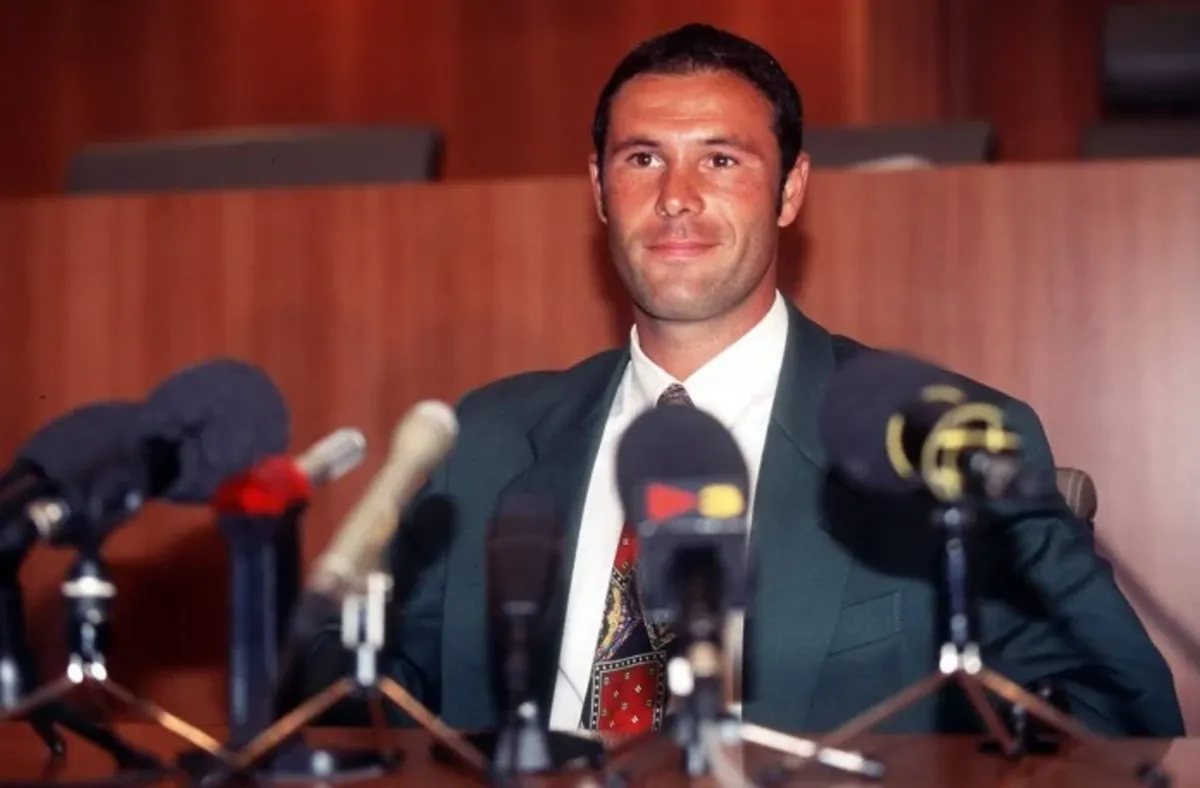 Photo: Bosman ruling, via images.saymedia-content.com
The Mechanics of the Invisible Deal
Under current FIFA and UEFA regulations, a player whose contract expires at the end of June may begin formal negotiations with a foreign club from 1 January of that year, and with a domestic club from the same date. But in practice — and increasingly by design — those conversations begin far earlier. Agents routinely enter dialogue with prospective clubs in August and September, with terms agreed and documents prepared well before any official window opens.
The result is a peculiar form of transfer theatre. Clubs publicly participate in January, fielding enquiries and issuing statements about their ambitions, while privately knowing their most coveted targets are already spoken for. Scouts file reports on players who will never be available. Fans speculate about signings that will never materialise — not because the player chose another club, but because the deal was done before Christmas.
Sources within several Premier League clubs have indicated to TransferVolt that the 2025-26 season saw a marked increase in pre-contract activity, with multiple high-profile players across the top five European leagues having their summer destinations effectively confirmed by December. The January window, in those cases, became a formality — a countdown rather than a competition.
 Photo: Premier League, via resources.premierleague.com
The Mid-Table Trap
If the practice benefits anyone, it is the elite clubs and the players themselves. A Champions League side can lock in a target on a free transfer, avoid a bidding war, and plan their summer squad rebuild with certainty. An agent secures their client's future on favourable wage terms without the pressure of a short negotiating window. Everyone, in theory, wins.
Except, that is, for the mid-table and lower-half Premier League clubs who depend on January not as a luxury but as a lifeline.
Consider the position of a club sitting seventeenth in the table at the turn of the year, desperate for a central midfielder or a striker to arrest a run of poor form. Their recruitment team identifies a target — a player in the final year of his contract at a Bundesliga side, available for a relatively modest fee in January or for nothing in the summer. The enquiry goes in. The response comes back politely but firmly: the player has already committed to a summer move elsewhere. The window closes without a signing. The club is relegated in May.
This is not a hypothetical. It is a pattern that sources describe as increasingly common across the 2025-26 season, with several Championship-bound sides having confirmed to TransferVolt that key targets they pursued in January had already signed pre-contract agreements with Premier League rivals or European clubs before the window opened. The names cannot be reported for legal reasons, but the frustration among recruitment staff is palpable.
"You're essentially competing in a market where the best free agents are already off the market before the market opens," one head of recruitment told TransferVolt. "It distorts everything."
What the Regulators Are Considering
Both UEFA and the Premier League are understood to be examining the issue, though neither body has yet proposed formal regulatory changes. The conversation within UEFA's transfer working group — which has been meeting quarterly since the Agent Regulation reforms of 2023 — has reportedly included discussion of introducing a mandatory disclosure window for pre-contract agreements, requiring clubs to publicly register such deals within a defined timeframe of signing.
The Premier League, for its part, is said to be exploring whether its own rulebook could be amended to restrict pre-contract negotiations between Premier League clubs and players contracted to other Premier League sides until a specified date. The aim would be to prevent the most egregious examples of competitive distortion — where a club in a relegation battle finds its own player's head already turned toward a rival before the season is even half complete.
Critics of tighter regulation argue that restricting pre-contract freedoms would infringe on player rights enshrined since Bosman, and that any UEFA-level intervention would face immediate legal challenge. They have a point. The right of a worker to negotiate their next employment freely is not something football's governing bodies can simply override.
But the counterargument — that the current system disproportionately advantages wealthy clubs who can offer the most attractive pre-contract terms and lock up talent months in advance — is gaining traction in the corridors of the Premier League's offices on Bruton Street.
The Commercial Dimension
There is a financial dimension to this conversation that extends beyond individual clubs. The January transfer window generates substantial commercial revenue — not just in transfer fees and agent commissions, but in broadcast engagement, media coverage, and the platform it provides for clubs to market themselves globally. Deadline day, in particular, remains one of the most-watched non-match events in the football calendar.
If pre-contract agreements continue to expand at their current rate, stripping the window of its genuine drama and reducing it to a series of confirmed loans and panic buys, that commercial value will erode. Sky Sports and TNT Sports both invest heavily in deadline day coverage. The Premier League benefits directly from the spectacle. A window that everyone in the industry knows is largely pre-determined is a window that loses its audience.
This, more than any concern about competitive fairness, may ultimately be the pressure point that forces regulatory change. When the money starts to notice, football tends to act quickly.
The Verdict
Pre-contract agreements are not inherently corrupt, nor are they going away. They are a rational response to an inflated transfer market in which clubs seek every possible advantage. But the 2025-26 season has made visible what insiders have known for years: the January window is increasingly a performance, and the real business is being conducted in the quiet months before it opens. Until regulators find a way to bring transparency and balance to pre-contract activity, mid-table clubs will continue to enter their most critical month already fighting with one hand tied behind their backs.