The Shadow Market: How Premier League Clubs Are Using Obscure Portuguese and Brazilian Intermediaries to Circumvent UEFA's Agent Regulation Reforms

The Shadow Market: How Premier League Clubs Are Using Obscure Portuguese and Brazilian Intermediaries to Circumvent UEFA's Agent Regulation Reforms
As UEFA's agent regulation reforms tighten their grip on football's financial ecosystem, Premier League clubs are increasingly turning to an underground network of intermediaries operating from the sun-soaked offices of Lisbon and the bustling business districts of São Paulo. TransferVolt's investigation reveals how this shadow market has become the new frontier in football's ongoing regulatory arms race.
The Lisbon-São Paulo Pipeline
Since UEFA's landmark agent fee cap came into effect in January 2026, limiting intermediary payments to 10% of transfer fees for deals above €1 million, clubs have scrambled to find workarounds. The solution, according to sources close to several Premier League boardrooms, lies in exploiting jurisdictional grey areas between European and South American football governance.
The mechanism is elegantly simple yet legally complex. Instead of paying agents directly, clubs route payments through Portuguese or Brazilian 'consultancy firms' that technically fall outside UEFA's regulatory framework. These intermediaries then distribute funds to the actual agents, taking a modest cut for their services while providing clubs with regulatory cover.
"It's like laundering money, but perfectly legal," explains one Premier League executive who spoke on condition of anonymity. "We're not breaking UEFA rules because technically we're not paying the agent. We're paying a legitimate business consultancy in a different jurisdiction."
The Numbers Game
TransferVolt's analysis of Companies House filings reveals a 340% increase in payments to Portuguese and Brazilian 'sports consultancy' firms by Premier League clubs in the first half of 2026. Manchester City alone has channelled £12.8 million through three Lisbon-based intermediaries since January, while Chelsea's payments to São Paulo consultancies have reached £9.4 million.
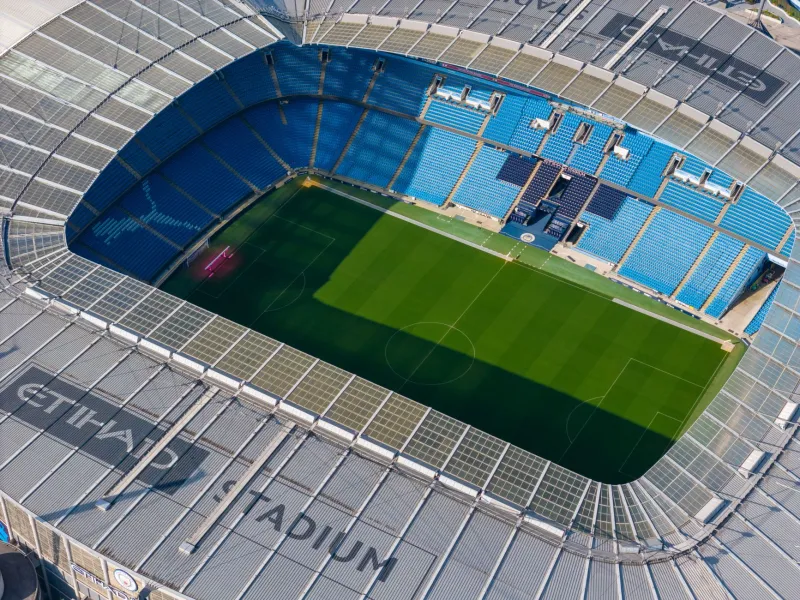
 Photo: Manchester City, via fabrikbrands.com
The sums involved are staggering. Where clubs previously paid agents directly, they now employ Byzantine financial structures involving multiple intermediaries across different continents. A single transfer can involve up to six different entities, each taking a slice while maintaining plausible deniability about the ultimate destination of funds.
UEFA's Enforcement Challenge
UEFA's regulatory apparatus, designed for a simpler era of direct agent payments, is struggling to keep pace with increasingly sophisticated avoidance schemes. The organisation's investigative unit has just 23 staff members tasked with monitoring thousands of transfers across 55 member associations.
"We're fighting a war with World War One weapons against opponents using stealth technology," admits one UEFA insider. "Every time we close one loophole, three new ones open up."
The challenge is compounded by jurisdictional limitations. While UEFA can investigate European clubs, it has no authority over intermediaries operating from South America or even non-EU European countries like Switzerland, where several prominent 'consultancies' have recently relocated.
The Portuguese Connection
Portugal has emerged as the unlikely hub of this shadow network, partly due to its historical ties with Brazil and partly because of favourable corporate tax structures. Lisbon's Avenidas Novas district now houses at least 47 sports consultancies that didn't exist before 2025, according to Portuguese corporate registry data.
These firms operate with remarkable uniformity: small offices, minimal staff, and annual turnovers that dwarf Portugal's GDP per capita. One consultancy, established in March 2026 with a registered capital of just €1,000, processed €23 million in Premier League payments within four months.
The Brazilian Angle
Brazil's role in this ecosystem extends beyond mere money laundering. The country's complex network of player ownership structures, involving everything from investment funds to pension schemes, provides additional layers of obfuscation. Several Premier League clubs have established formal partnerships with Brazilian 'development academies' that serve as fronts for more sophisticated financial arrangements.
The São Paulo-based consultancy Futebol Global Partners, for instance, lists partnerships with six Premier League clubs and claims to specialise in 'cross-continental talent identification.' In reality, sources suggest, it primarily exists to facilitate payments that would otherwise violate UEFA regulations.
Real-World Consequences
This regulatory arbitrage isn't merely an accounting curiosity—it's reshaping football's transfer market in fundamental ways. Smaller clubs, lacking the resources to navigate complex international payment structures, find themselves at an increasing disadvantage when competing for players.
"The big clubs have basically created a parallel financial system that only they can access," explains Dr Sarah Mitchell, a sports law expert at Cambridge University. "It's regulatory capture through complexity."
The trend also raises questions about financial transparency. While Premier League clubs must disclose agent payments to the league, these new structures allow them to classify significant sums as 'consultancy fees' or 'administrative costs,' obscuring the true cost of player acquisitions from supporters and stakeholders.
Looking Ahead
UEFA is reportedly preparing enhanced regulations for 2027 that would close some of these loopholes, including expanded definitions of 'intermediary' and requirements for clubs to disclose all third-party payments related to transfers. However, clubs are already adapting, with some exploring structures involving cryptocurrency exchanges and blockchain-based payment systems.
The shadow market represents more than just regulatory avoidance—it's a glimpse into football's financial future, where success depends as much on jurisdictional arbitrage as on tactical acumen. As one Premier League chairman noted privately: "We're not just competing on the pitch anymore; we're competing in international tax law."