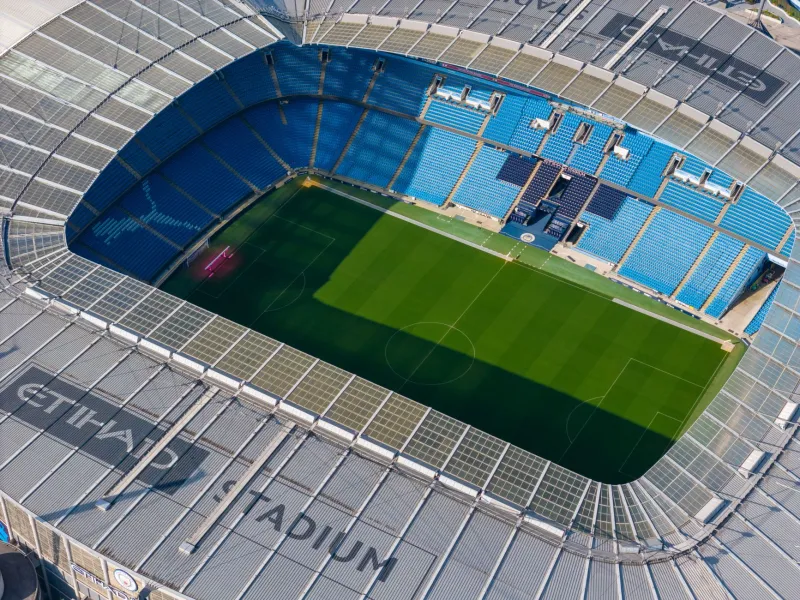
Scan and Deliver: How Advanced Medical Technology Is Quietly Killing Football Transfers — And Leaving Players in Legal Limbo
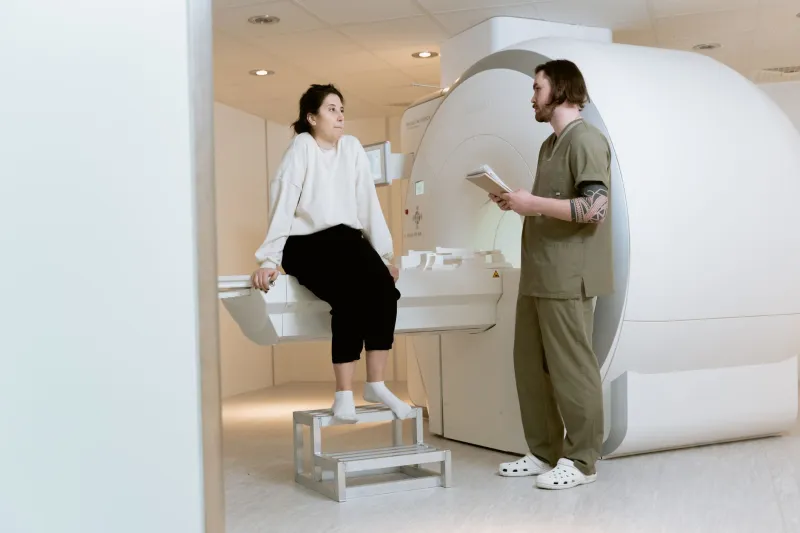
The deal was done. The fee agreed, the personal terms signed, the squad number discussed. Then the player walked into the scanning room, and everything stopped.
This is the story of the 2026 summer transfer window that nobody is telling loudly enough. Behind the headlines of record fees and glamour signings lies a quieter, more unsettling narrative: an accelerating number of high-profile moves are being derailed not by a breakdown in negotiations or a rival bid, but by medical technology so advanced that it is now detecting conditions in footballers that would have passed completely unnoticed a decade ago. The machines, it turns out, have become the transfer market's most powerful gatekeepers — and almost nobody is talking about what that means.
The New Anatomy of a Failed Medical
For most of football's modern history, a pre-signing medical was largely procedural. A fitness check. A formality that confirmed what the eye test had already suggested. Clubs ran players through basic cardiovascular assessments, checked for obvious musculoskeletal concerns, and signed off. The process rarely lasted more than a day.
That world no longer exists at the top end of the game.
Since 2023, a significant cluster of Premier League clubs — understood to include several of the division's most analytically progressive outfits — have integrated AI-assisted MRI analysis into their standard medical protocols. These systems, developed initially for orthopaedic and neurological diagnostics in clinical healthcare, are capable of identifying micro-fractures, early-stage cartilage degradation, and soft tissue irregularities that the human eye would never catch on a standard scan. The technology does not diagnose; it flags. But when it flags, clubs are increasingly choosing to walk away.
 Photo: Premier League, via resources.premierleague.com
Cardiac screening has undergone a parallel revolution. The introduction of high-resolution echocardiography and genetic cardiac risk profiling — accelerated in part by the post-pandemic scrutiny of athlete heart health — means that conditions such as myocardial fibrosis, hypertrophic cardiomyopathy variants, and arrhythmia markers are now being detected in players who are, by every visible measure, in peak physical condition.
The result is a growing cohort of professional footballers who have failed medicals not because they are injured, but because they have been found to carry risks that their buying clubs are unwilling to absorb.
The Legal Grey Zone
Here is where the situation becomes genuinely complex — and, for the players concerned, deeply distressing.
There is no standardised legal framework governing what happens when a transfer collapses at the medical stage. FIFA's regulations cover the mechanics of international transfers with considerable rigour. They say almost nothing about medical failure thresholds, disclosure obligations, or the rights of a player whose move has been blocked on the basis of a biometric assessment that his own medical team may dispute.
In practice, this creates a three-way tension between the buying club, the selling club, and the player. If a move collapses after a medical failure, the player typically returns to his parent club — but the nature of the failed medical may now be known to other potential suitors. Whether that information can legally be shared, and in what form, sits in a regulatory no man's land that football's governing bodies have not yet moved to address.
Several players' unions across Europe, including the PFA in England, are reportedly in early-stage discussions about pushing for a formal code of practice. But the pace of regulatory change in football rarely matches the pace of technological adoption.
The Human Cost
Beyond the legal mechanics, the human dimension of this issue demands attention.
Consider the position of a player in his late twenties, at the height of his market value, who has trained meticulously and performed consistently at the highest level. He has passed every medical his current club has ever asked him to complete. He has never missed significant time through injury. Then a prospective new club runs him through their AI-assisted cardiac screening, flags a structural irregularity, and withdraws their offer. He is not ill. He is not injured. He is, by the assessment of his own cardiologist, fit to play. But the transfer is dead.
His valuation has not formally changed. His contract remains intact. But the market has been quietly informed, and the next interested club will ask the same questions. The machine has rendered a verdict that no court of appeal in football is currently equipped to hear.
Sources within the player representation community, speaking to TransferVolt on condition of anonymity, indicate that at least a handful of such cases have occurred during the current 2026 summer window — none of which have been publicly disclosed, precisely because neither club nor player has an incentive to confirm what happened.
The Club's Perspective
It would be wrong to characterise clubs as acting recklessly or cynically. The financial stakes of a failed signing at Premier League level are enormous. A £60 million player who breaks down irreparably in year two of a five-year contract represents not just a sporting failure but a balance sheet catastrophe. The drive to minimise that risk is entirely rational.
What is less rational — or at least less examined — is the question of whether the thresholds being applied are proportionate. Medical technology can identify risk; it cannot quantify it with certainty. A flag on an AI-assisted scan does not guarantee injury. The challenge facing clubs, their medical directors, and their legal teams is determining when a flagged risk is genuinely prohibitive and when it is being treated as such simply because the technology now makes it visible.
Some clubs have begun bringing in independent second-opinion protocols, running disputed assessments through external clinical teams before making a final decision. It is a step in the right direction. But it remains the exception rather than the rule.
What Needs to Change
The Premier League and UEFA both have the leverage and the responsibility to act here. A formal framework — governing disclosure standards, establishing independent arbitration for disputed medical assessments, and protecting players from having failed medical information informally circulated in the market — is not just desirable. It is overdue.
The technology is not going away. If anything, the next iteration of AI-assisted diagnostics will be more sensitive still, catching conditions at even earlier stages. Football must decide, collectively, how it wants to govern the decisions those machines produce.
For now, the scanning suite remains a room where careers can be quietly redirected, deals can silently die, and players can find themselves in a legal grey zone with no clear route out. The transfer market has always been brutal. It has rarely been quite this clinical.
Verdict: Medical technology is advancing faster than football's regulatory infrastructure can keep pace with — and until governing bodies establish a clear legal framework, players will continue to bear the human cost of a system that has no formal mechanism for fairness.