The Numbers Don't Lie
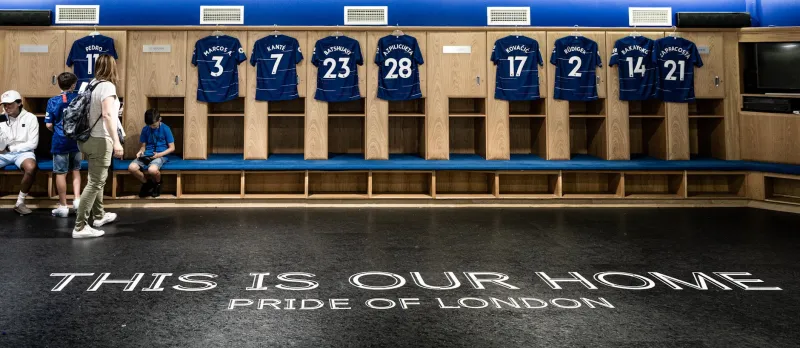
Chelsea's 42-man registered squad for the 2025-26 season wasn't an anomaly — it was the logical endpoint of a dangerous trend that's been building across the Premier League for years. Manchester City (38 players), Manchester United (36), and Arsenal (35) have all crossed the threshold into what industry insiders are calling "squad hoarding" territory, creating a perfect storm that's fundamentally breaking how the transfer market operates.
The scale of this issue becomes clear when examining the financial implications. These four clubs alone are paying wages to 151 registered players, with conservative estimates suggesting £2.8 billion in annual salary commitments for squad members who, in many cases, will never feature in meaningful matches.
The Financial Fair Play Loophole
The root cause lies in how clubs are exploiting Financial Fair Play regulations to circumvent spending restrictions. By spreading transfer fees across extended contract periods — some now reaching eight or nine years — clubs can technically comply with FFP whilst accumulating vast squads of expensive assets.
"What we're seeing is creative accounting taken to its logical extreme," explains Dr Sarah Matthews, a sports finance specialist at the University of Liverpool. "Clubs are treating players like financial instruments rather than sporting assets, and the regulatory framework hasn't caught up."
The mechanism works by amortising transfer fees over contract length whilst booking the entire sale value of outgoing players immediately. A £50 million signing on a seven-year deal only counts as £7.14 million per year against FFP calculations, but selling a homegrown player for £30 million provides an instant £30 million boost to the books.
The Human Cost
Behind these calculations are real players whose careers are being systematically undermined. Manchester United's squad includes seven central midfielders, five of whom have started fewer than three Premier League matches this season. Chelsea's loan army has become a permanent feature, with 23 players currently farmed out to clubs across Europe.
The psychological impact on these players is profound. Sports psychologist Dr James Henderson notes: "We're creating a generation of footballers who are technically professionals but functionally unemployed. The mental health implications of being contracted to a club that has no intention of using you are severe."
Agent fees compound the problem. Super-agents are incentivised to push through deals regardless of playing time prospects, earning commissions on transfers that benefit no one except the intermediaries. The Premier League paid £318 million in agent fees during the 2025 summer window alone — a 47% increase on the previous year.
Championship Clubs Bear the Brunt
The knock-on effects extend far beyond the Premier League's ivory towers. Championship clubs, traditionally reliant on loan deals to strengthen their squads affordably, are finding themselves priced out of a market they once accessed freely.
"We used to be able to take promising Premier League youngsters on loan with the parent club covering most of the wages," explains Burnley's Director of Football, Mike Rigg. "Now we're competing with Serie A clubs for the same players, and the wage demands have tripled."
The data supports this frustration. Championship clubs signed 127 loan players from Premier League sides in January 2024. By January 2026, that number had fallen to 73, despite more players being available than ever before.
Regulatory Response
UEFA and the Premier League are finally acknowledging the crisis. Sources close to the Premier League's regulatory committee indicate that squad size limits — similar to those in La Liga (25 players) and Ligue 1 (30 players) — are being seriously considered for implementation from the 2027-28 season.
"The current situation is unsustainable," admits a Premier League executive who requested anonymity. "We're seeing competitive balance eroded, player welfare compromised, and smaller clubs squeezed out of loan markets they've relied on for decades."
The proposed regulations would limit Premier League squads to 28 registered players over 21, with unlimited Under-21 homegrown players. Clubs exceeding these limits would face points deductions and transfer restrictions.
The Wider Market Impact
The squad hoarding phenomenon is creating artificial scarcity in the transfer market. With top-tier players locked into long-term contracts at clubs where they rarely play, the pool of available talent for clubs seeking genuine first-team additions has shrunk dramatically.
Transfer fees have responded predictably. The average fee for a Premier League signing has increased by 34% since 2024, not due to inflation or increased quality, but because genuinely available players are becoming increasingly rare commodities.
Breaking Point Approaches
The current model is approaching its breaking point. Player unions are threatening legal action over career development restrictions, whilst smaller clubs are forming coalitions to challenge what they see as anti-competitive practices.
The 2026 summer transfer window may prove decisive. With Financial Fair Play regulations set to tighten and squad size limits looming, Premier League clubs face a reckoning that could force the sale of dozens of unwanted players at significant losses.
The Path Forward
Solutions exist, but require coordinated action. Implementing strict squad size limits, closing FFP amortisation loopholes, and introducing salary caps for unused players would begin to restore market balance.
More fundamentally, football's governing bodies must decide whether the sport exists primarily as entertainment or as a financial instrument for wealthy investors. The current trajectory suggests the latter is winning, but the cost to competitive integrity and player welfare may prove too high to sustain.
The Premier League's squad hoarding epidemic represents more than poor resource allocation — it's a symptom of a transfer market that has lost sight of football's fundamental purpose, and urgent intervention is required before the damage becomes irreversible.