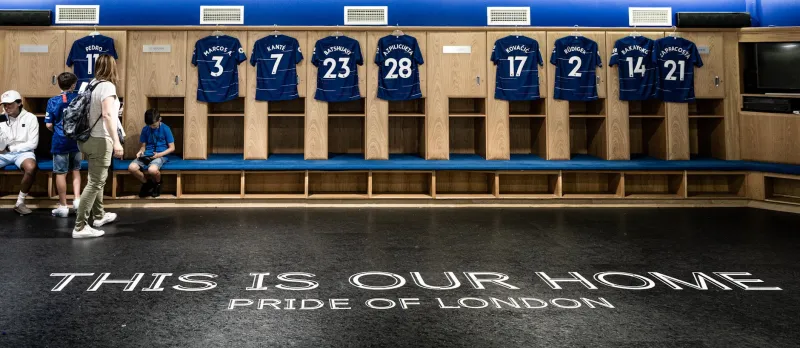
In the sterile corridors of Premier League training grounds across England, a silent war is being waged. It's not fought with tackles or through-balls, but with isolation, exclusion, and calculated psychological pressure designed to make unwanted players disappear.
 Photo: Premier League, via ironabbey.com
Welcome to football's cold storage programme — the increasingly common practice of Premier League clubs systematically freezing out transfer-listed players to accelerate their departures and protect their bottom line.
The Anatomy of Isolation
The process follows a predictable pattern. First comes the conversation — usually brief, clinical, and delivered by a sporting director rather than the manager. The player is informed they're no longer part of the club's plans. Then begins the methodical dismantling of their professional existence.
Squad numbers are stripped away, often redistributed to new signings before the ink is dry on departure paperwork. Training sessions are relocated — the unwanted players relegated to working with the development squad or, in extreme cases, alone with a fitness coach. Dressing room lockers are cleared, club car parking spaces reassigned, and invitations to team bonding events quietly withdrawn.
The message is unmistakable: you don't belong here anymore.
This summer has seen the strategy deployed with particular ruthlessness. Multiple Premier League clubs have created what insiders euphemistically call "transition groups" — squads of players training separately from the main team while their representatives scramble to find new clubs before the transfer window closes.
The Financial Mathematics
The economics driving this behaviour are brutally simple. Every week an unwanted player remains on the books represents dead money — wages paid for zero sporting return, registration slots occupied by assets the club cannot utilise, and potential transfer fees depreciating with each passing month.
For clubs operating under Financial Fair Play constraints, these calculations become even more pressing. A £100,000-per-week player who cannot be moved represents £5.2 million in annual costs, money that could be reinvested in squad improvements or used to balance the books.
The isolation strategy serves multiple purposes: it demonstrates to potential buyers that the player is genuinely available, removes any possibility of the individual forcing their way back into contention through training ground performances, and creates sufficient discomfort to encourage acceptance of reduced terms elsewhere.
Legal Grey Areas and Regulatory Gaps
The Professional Footballers' Association has grown increasingly concerned about these practices, but the legal framework offers limited protection. Clubs argue they're fulfilling contractual obligations by continuing to pay wages and providing training facilities, even if those facilities are deliberately inferior to what the first team receives.
 Photo: Professional Footballers' Association, via www.glue-creative.com
"There's a difference between breach of contract and creating an environment so uncomfortable that departure becomes inevitable," explains one employment law specialist familiar with football disputes. "Clubs have become sophisticated at operating within the letter of the law while violating its spirit."
The regulatory response has been piecemeal. FIFA's recent guidance on training standards applies only to international transfers, while domestic leagues retain significant autonomy over how clubs treat their own players. The result is a patchwork of protections that sophisticated legal teams can easily navigate.
The Human Cost
Beyond the contractual complexities lies a more fundamental question about dignity and professional respect. Players describe the experience as dehumanising — being transformed overnight from valued team member to corporate liability.
"You go from being part of a family to being treated like a virus," one recently departed Premier League player told TransferVolt on condition of anonymity. "The worst part isn't the isolation — it's watching your former teammates pretend it's normal, that this is just how football works."
The psychological impact extends beyond the individuals directly affected. Squad members witness colleagues' treatment and understand the implicit message: perform or face the same fate. The resulting atmosphere can poison dressing room culture and undermine the collective spirit essential for on-field success.
International Variations
The cold storage approach isn't universal across European football. German clubs, bound by different employment laws and cultural expectations, typically maintain more respectful separation processes. Spanish clubs often loan unwanted players to preserve relationships and protect transfer values rather than pursuing outright isolation.
The Premier League's particular embrace of these tactics reflects both its financial pressures and its cultural acceptance of ruthless business practices. The league's global profile means player treatment receives more scrutiny, yet clubs continue to prioritise economic efficiency over individual welfare.
Systemic Implications
The normalisation of cold storage tactics represents a fundamental shift in football's power dynamics. Players, despite their substantial salaries, find themselves increasingly vulnerable to institutional pressure designed to override their contractual rights through psychological manipulation rather than legal process.
This evolution threatens to undermine the transfer market's efficiency. Players subjected to isolation tactics often accept below-market transfers simply to escape their circumstances, creating artificial price depression that distorts the broader market.
Younger players, witnessing these practices, may become more cautious about contract negotiations, potentially demanding additional protections that could complicate future dealings.
The Path Forward
Reforming these practices requires coordinated action across multiple stakeholders. The PFA has called for minimum training standards and dignity clauses in standard contracts, while some agents now negotiate specific protections against isolation tactics.
Clubs, meanwhile, argue that treating unwanted players differently from squad members represents reasonable resource allocation rather than harassment. They point to continued wage payments and medical support as evidence of fulfilled obligations.
The tension between business efficiency and human dignity will likely intensify as transfer fees continue rising and Financial Fair Play regulations tighten. Without meaningful intervention, cold storage tactics may become even more widespread and sophisticated.
The current system serves club interests while imposing significant costs on individual players and broader football culture. Whether the sport's governing bodies possess the will to address these practices remains an open question — one that will define football's values for the next generation.
As Premier League clubs continue perfecting their isolation strategies, the human cost of modern football's ruthless efficiency becomes increasingly difficult to ignore.